.png)
Financial Planning
That Evolves With Your Life
Real planning adapts as your income, family, and goals change—not once every decade.
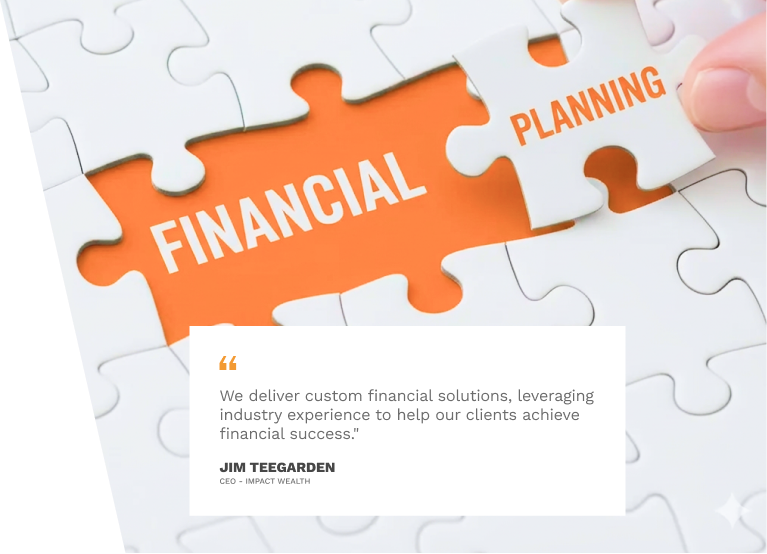
Life can change faster than what you plan for—career growth, business exits, family needs, tax law changes.
Without ongoing planning, even good decisions can become outdated.
MOST FINANCIAL PLANS ARE STATIC IN A DYNAMIC LIFE


A Living, Integrated Financial Strategy
Impact Wealth builds financial plans that integrate cash flow, investments, protection, taxes, and long-term goals—designed to evolve as your life does.

5 Signs Your Financial Plan Is Outdated
Major life changed aren’t reflected

Marriage, divorce, a new child, career changes, or caring for aging parents can dramatically shift your priorities. Your plan should consider change.
Your goals haven’t been revisited in years
What mattered five or ten years ago may not be what matters most today. A static plan can quietly drift out of alignment with your current vision.
Tax planning is an afterthought
If your plan focuses only on accumulating wealth and ignores tax efficiency, you may be leaving significant value on the table over time.
Your investment strategy no longer fits your risk tolerance
As income, timelines, and responsibilities change, so should your approach to risk. An outdated strategy could expose you to more, or less, risk than you realize.
Your plan lives in a file, not real life
A financial plan should be an integrated strategy that helps guide decisions year after year. Not a one-time document that’s rarely reviewed.
THE IMPACT WEALTH ROADMAP
.jpg)
EXPLORE IF THIS BELONGS IN YOUR PORTFOLIO
No obligation. Strategy-first conversation.
.png)